
If you or someone close to you is planning to stop drinking, one of the first questions that comes up is what the next few days will actually look like. Alcohol withdrawal follows a reasonably predictable pattern, and knowing that pattern makes it easier to recognize what is typical, what is not, and when medical supervision becomes necessary.
This guide walks through the alcohol withdrawal timeline stage by stage, describes the symptoms that appear at each point, and explains the warning signs that mean someone needs professional care rather than waiting it out at home.
What Is Alcohol Withdrawal?
Alcohol withdrawal is the group of physical and psychological symptoms that appear when a person who drinks heavily and regularly reduces or stops their intake. Regular heavy drinking changes the way the central nervous system regulates itself. The nervous system adapts to the constant presence of alcohol, and when that alcohol is removed, the system stays in an overactive state for a period of time. That overactivity is what produces the shaking, sweating, anxiety, and sleep disruption that people associate with alcohol withdrawal syndrome.
Not everyone who stops drinking experiences withdrawal. The likelihood and severity generally relate to how much a person drinks, how long they have been drinking at that level, whether they have gone through withdrawal before, and their overall physical health. Someone who drinks occasionally is unlikely to experience anything significant. Someone who has been drinking heavily every day for years is far more likely to experience symptoms that require medical attention.
When Do Alcohol Withdrawal Symptoms Start?
For most people, alcohol withdrawal symptoms start within 6 to 12 hours after the last drink. That timing surprises people, because it means symptoms can begin while blood alcohol is still measurable. In practice, someone who stops drinking in the evening may begin noticing symptoms by the following morning.
The earliest signs are usually mild and easy to mistake for something else: restlessness, irritability, difficulty sleeping, a headache, mild nausea, or a general sense of unease. Because these overlap with an ordinary hangover, they are often dismissed. The distinguishing feature is that hangover symptoms improve over the course of the day, while withdrawal symptoms tend to intensify.
Alcohol Withdrawal Timeline Stage by Stage
The stages of alcohol withdrawal below describe a general pattern. Individual experiences vary, and the presence of other health conditions can shift the timeline in either direction.
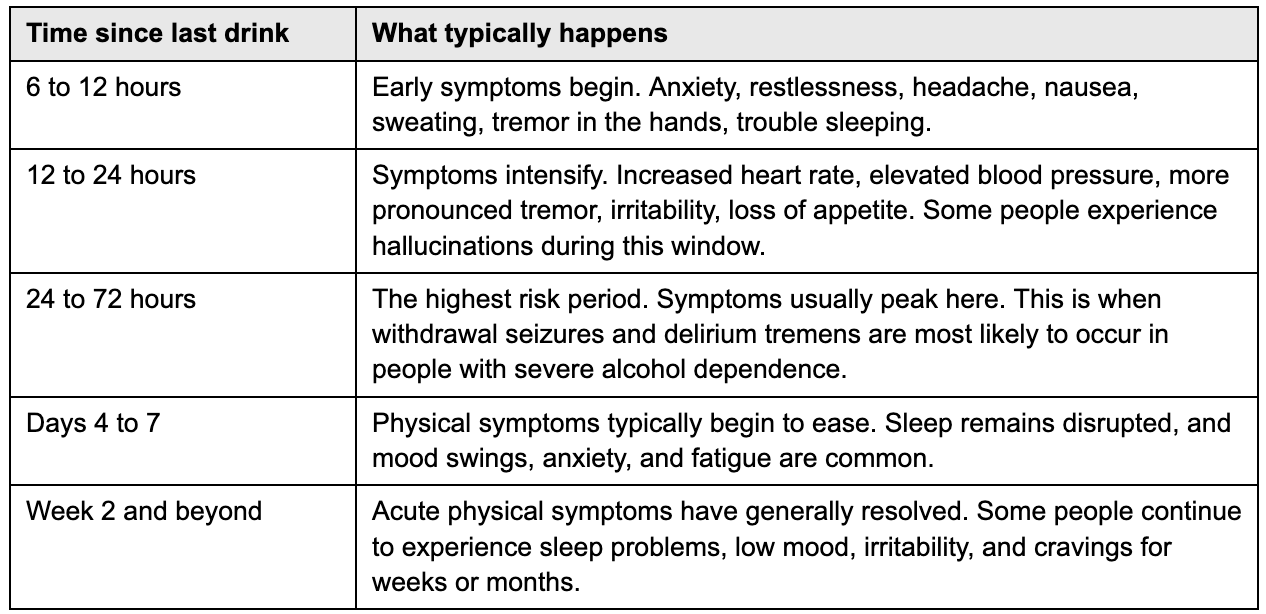
The pattern above is why the first three days matter so much. Someone can feel manageable at hour 10 and be in serious difficulty by hour 40. Planning for that window, rather than judging the situation by how the first morning feels, is the safest approach.
The First 24 Hours
Early withdrawal is dominated by nervous system overactivity. Hands may shake, particularly first thing in the morning. Sweating is common, even in a cool room. Many people describe a persistent sense of dread that has no obvious cause. Nausea, an alcohol withdrawal headache, and digestive upset including diarrhea are also frequently reported.
Days 2 and 3
This is the period that requires the closest attention. Blood pressure and heart rate often rise. Tremor becomes more pronounced. Sleep may be almost impossible. For people with a long history of heavy drinking, this is the window in which the most serious complications appear.
The First Week and After
By the end of the first week, most of the acute physical symptoms have settled. What tends to persist is fatigue, disrupted sleep, and emotional volatility. These lingering effects are sometimes described as post-acute withdrawal, and they are one reason that ongoing support after detox matters as much as getting through the first few days.
Common Symptoms of Alcohol Withdrawal
Signs of alcohol withdrawal fall into physical and psychological categories, and most people experience some of both.
Physical symptoms commonly include:
Tremor, most noticeable in the hands
Sweating and clammy skin
Nausea and vomiting
Alcohol withdrawal diarrhea and other digestive upset
Headache
Rapid heartbeat and raised blood pressure
Fatigue and physical weakness
Loss of appetite
Psychological symptoms commonly include:
Anxiety and agitation
Irritability and mood swings
Difficulty concentrating
Insomnia and vivid dreams
Low mood
Alcohol withdrawal hallucinations, which may be visual, auditory, or tactile
People often ask what alcohol withdrawal feels like. The most common description is a combination of a severe hangover and an intense anxiety episode occurring at the same time, with a physical restlessness that makes sitting still difficult.
Mild Versus Severe Withdrawal
Mild alcohol withdrawal symptoms include tremor, sweating, mild anxiety, headache, and disrupted sleep. These are uncomfortable but generally not dangerous on their own, and they usually resolve within a few days.
Severe alcohol withdrawal is a different situation. It can involve confusion, disorientation, hallucinations, seizures, and dangerous changes in heart rate, blood pressure, and body temperature. Severe withdrawal is a medical emergency and requires immediate professional care.
The difficulty is that mild withdrawal can progress into severe withdrawal, and it is not always possible to predict who this will happen to. A person's history is the most useful indicator: anyone who has previously experienced withdrawal seizures or delirium tremens is at elevated risk of experiencing them again.
When Alcohol Withdrawal Becomes Dangerous
People frequently ask whether you can die from alcohol withdrawal. The answer is that yes, severe alcohol withdrawal can be fatal without medical treatment. This is one of the few substances where the withdrawal process itself, rather than the substance, carries a serious risk to life.
Withdrawal Seizures
Alcohol withdrawal seizures typically occur within the first 48 hours after the last drink. They can happen in people who have no history of epilepsy. A seizure during withdrawal is a signal that the nervous system is severely destabilized and that medical care is needed immediately.
Delirium Tremens
Delirium tremens, often shortened to DTs, is the most serious form of alcohol withdrawal. It usually appears between 48 and 72 hours after the last drink and involves severe confusion, disorientation, agitation, hallucinations, fever, and significant cardiovascular instability. Delirium tremens is a medical emergency and carries a meaningful risk of death when it is not treated in a clinical setting.
Seek emergency medical help if any of the following appear:
A seizure of any kind
Confusion, disorientation, or not knowing where one is
Hallucinations
Fever
Chest pain or difficulty breathing
Severe vomiting that prevents keeping fluids down
A heart rate that stays elevated and does not settle
How Long Does Alcohol Detox Take?
For most people, the acute phase of alcohol detox takes between 5 and 7 days. Symptoms typically begin within 6 to 12 hours, peak somewhere between 24 and 72 hours, and gradually ease over the remainder of the first week.
The length of time it takes to detox from alcohol depends on several factors: how much and how long a person has been drinking, age and general health, liver function, whether other substances are involved, and whether the person has been through withdrawal before. Repeated withdrawal episodes tend to become more severe over time, which is one reason that going through it repeatedly without support is not advisable.
It is worth separating two things that often get confused. Detox is the process of clearing alcohol from the body and stabilizing through withdrawal, and it takes days. Recovery is the longer process that follows, and it involves addressing why the drinking was happening in the first place.
Why Detoxing Alone Carries Risk
Searches for home remedies for alcohol withdrawal are extremely common, and the reasoning behind them is understandable. Detox at home feels private, costs nothing, and avoids the difficulty of explaining the situation to anyone else.
The problem is that the symptoms that are most dangerous, seizures and delirium tremens, tend to appear suddenly and after the point at which the person is able to assess their own condition clearly. There is no home remedy that prevents a withdrawal seizure. By the time serious symptoms appear, the person experiencing them is frequently not in a position to seek help on their own.
Medically supervised detox exists because withdrawal is monitored rather than endured. Vital signs are checked regularly, symptoms are managed as they develop, and complications are addressed before they escalate. For anyone who drinks heavily on a daily basis, has been through withdrawal before, or has other health conditions, supervision is the appropriate choice.
Medically Supervised Detox and Treatment in Idaho
The Walker Center is a non-profit addiction treatment provider that has served Idaho since 1976. Residential services are located in Gooding and outpatient services in Twin Falls. Programs are CARF-accredited and delivered by licensed and certified professionals.
If you are trying to work out whether withdrawal can be managed at home or whether supervision is needed, speaking with a treatment professional is a reasonable first step. Confidential assessments are available, and staff can explain program options and payment arrangements.
Call 1-800-227-4190 to speak with our team.
FAQ
How long does alcohol withdrawal last?
The acute phase generally lasts 5 to 7 days. Symptoms usually begin 6 to 12 hours after the last drink and peak between 24 and 72 hours. Sleep problems, low mood, and cravings can continue for weeks afterward.
When do alcohol withdrawal symptoms start?
Most people notice the first symptoms within 6 to 12 hours of their last drink. Early symptoms are often mild and can resemble a hangover.
What does alcohol withdrawal feel like?
Most people describe a combination of severe hangover symptoms and intense anxiety, along with tremor, sweating, restlessness, and difficulty sleeping.
Can you die from alcohol withdrawal?
Yes. Severe alcohol withdrawal, particularly delirium tremens, can be fatal without medical treatment. This is why supervised detox is recommended for people with heavy, long-term alcohol use.
Can alcohol withdrawal cause seizures?
Yes. Withdrawal seizures usually occur within the first 48 hours and can happen in people with no history of epilepsy. A seizure requires immediate medical attention.
What helps with alcohol withdrawal?
Medical supervision is the most effective approach, because symptoms can be monitored and managed as they develop. Rest, hydration, and nutrition support the process, but they do not prevent serious complications.
How long does alcohol detox take?
Alcohol detox typically takes 5 to 7 days for the acute phase, though the timeline varies based on drinking history, age, general health, and previous withdrawal episodes.