
If you're trying to understand the difference between inpatient and outpatient treatment, the short answer comes down to one thing: how much structure and support does someone need right now? Inpatient treatment means living at the facility and focusing entirely on recovery. Outpatient treatment means getting help while continuing to live at home.
Both paths lead to recovery. They just look different depending on where someone is in their journey. Neither one is universally "better." The right fit depends on the person, their situation, and what they need to succeed.
What Is Inpatient Treatment?
Inpatient treatment (sometimes called residential treatment) is when someone lives at the treatment center for the duration of their program. Days are structured and full, with individual counseling, group sessions, recovery education, and support from staff around the clock.
A typical day in inpatient treatment often includes:
Individual counseling
Group counseling
Recovery education
Wellness activities
Structured daily routines
Peer support opportunities
For someone who has tried to stop before but keeps returning to the same patterns or environment, inpatient care can provide the stability and distance needed to finally build real momentum in recovery.
Who Is Inpatient Treatment Best Suited For?
Inpatient treatment tends to be the right fit for people who:
Have struggled with substance use for an extended period
Have experienced previous relapses
Need separation from environments associated with substance use
Require a highly structured recovery setting
Need additional support while developing recovery skills
Families often start looking into inpatient care when substance use has started affecting more than one area of life: relationships, work, physical health, or emotional well-being. If things feel like they're unraveling, a higher level of care can help stop the spiral.
What Is Outpatient Treatment?
Outpatient treatment lets people get real support for substance use while still living at home. You attend scheduled sessions like counseling, group therapy, recovery programming, and then return to your regular life in between.
The flexibility of outpatient care makes it a strong option for people who have a safe home situation, a solid support system, and the ability to practice recovery skills in real life while still getting professional guidance.
Outpatient treatment may include:
Individual counseling
Group counseling
Recovery education
Relapse prevention planning
Ongoing recovery support
It's also a common next step for someone transitioning out of inpatient care. It’s a way to stay connected to treatment and accountability while gradually returning to work, school, or family life.
Who Is Outpatient Treatment Best Suited For?
Outpatient treatment may be appropriate for individuals who:
Have a supportive and safe home environment
Can attend treatment consistently while maintaining responsibilities
Need ongoing support but not a 24-hour structure
Are transitioning from a higher level of care
Have demonstrated the ability to remain engaged in recovery outside of a residential setting
Outpatient programs give people the chance to practice recovery skills in real life, at home, at work, in their actual community, with professional support there to catch them if they stumble.
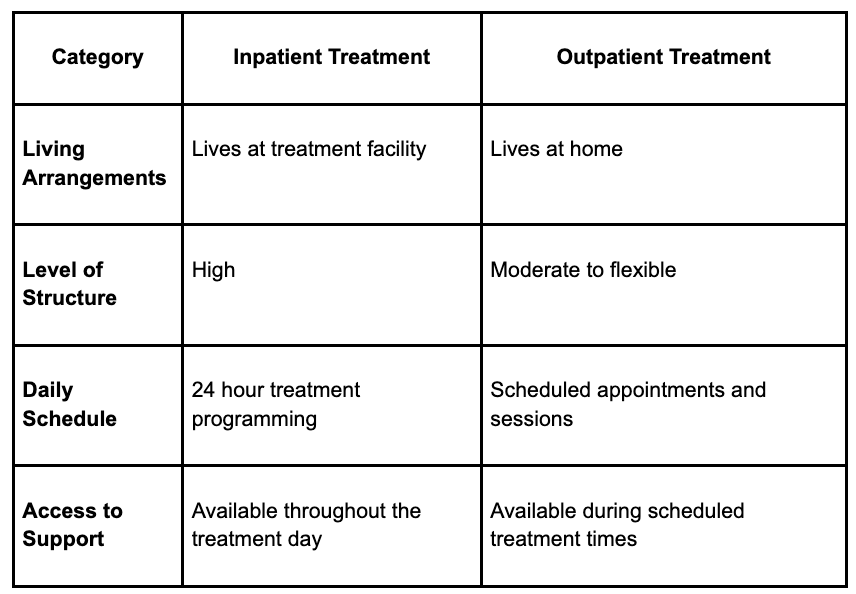
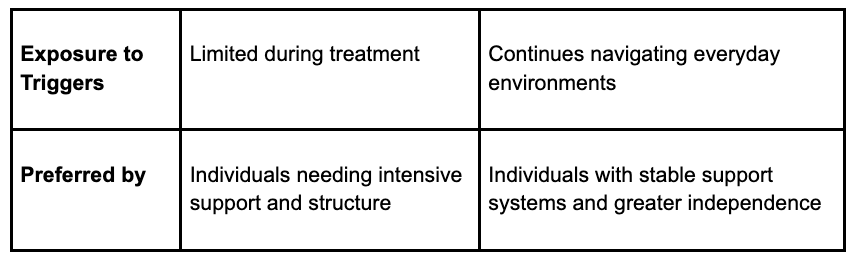
Inpatient vs. Outpatient Treatment Using a Side-by-Side Comparison
Understanding Your Treatment Options
If you're searching for answers about inpatient versus outpatient rehab, you're probably trying to figure out what's right for you or someone you care about… and that's hard. The good news is that both approaches work. Inpatient care offers full immersion in recovery, away from everyday triggers. Outpatient care provides professional support while letting someone stay connected to their life. The key is matching the right level of care to where someone is right now.
If you or someone you love is trying to figure out the right next step, the team at The Walker Center is here to help. You don't have to have all the answers. That's what we're here for. Contact us today to learn more.
FAQs
What is the difference between inpatient and outpatient treatment?
Inpatient treatment means living at a treatment facility full-time during care — you're there 24/7 with structured programming, around-the-clock support, and no exposure to outside triggers. Outpatient treatment means you live at home and come in for scheduled counseling and recovery sessions, then return to your normal routine.
Is inpatient treatment more effective than outpatient treatment?
Neither is universally more effective. The best treatment is the one that fits the person. Someone with a severe addiction, a history of relapses, or an unstable home environment may do better in inpatient care. Someone with a stable support system and less severe use may thrive in outpatient. Research shows that both approaches lead to positive outcomes when properly matched to individual needs.
What is an Intensive Outpatient Program (IOP)?
An Intensive Outpatient Program (IOP) is a step between standard outpatient and inpatient care. It typically involves multiple sessions per week (often 3 to 5 days) for several hours at a time. It's a good option for people who need more support than weekly therapy but don't require 24-hour residential care.
Who should consider inpatient treatment?
Inpatient care is worth considering when someone needs a high level of structure and separation from their current environment,especially if they've struggled to stay sober at home, have experienced multiple relapses, or are dealing with co-occurring mental health challenges.
Who should consider outpatient treatment?
Outpatient treatment is often a great fit for people who have a stable home life, a strong support network, and the ability to apply recovery skills in their everyday environment. It's also a natural transition point after completing inpatient care.
How do treatment providers determine the right level of care?
Treatment providers use a clinical assessment process that looks at the full picture: substance use history, mental health, living situation, support systems, and personal goals. Based on that, they recommend the level of care that gives someone the best chance at lasting recovery. At The Walker Center, we walk through this together; no one has to figure it out alone.